
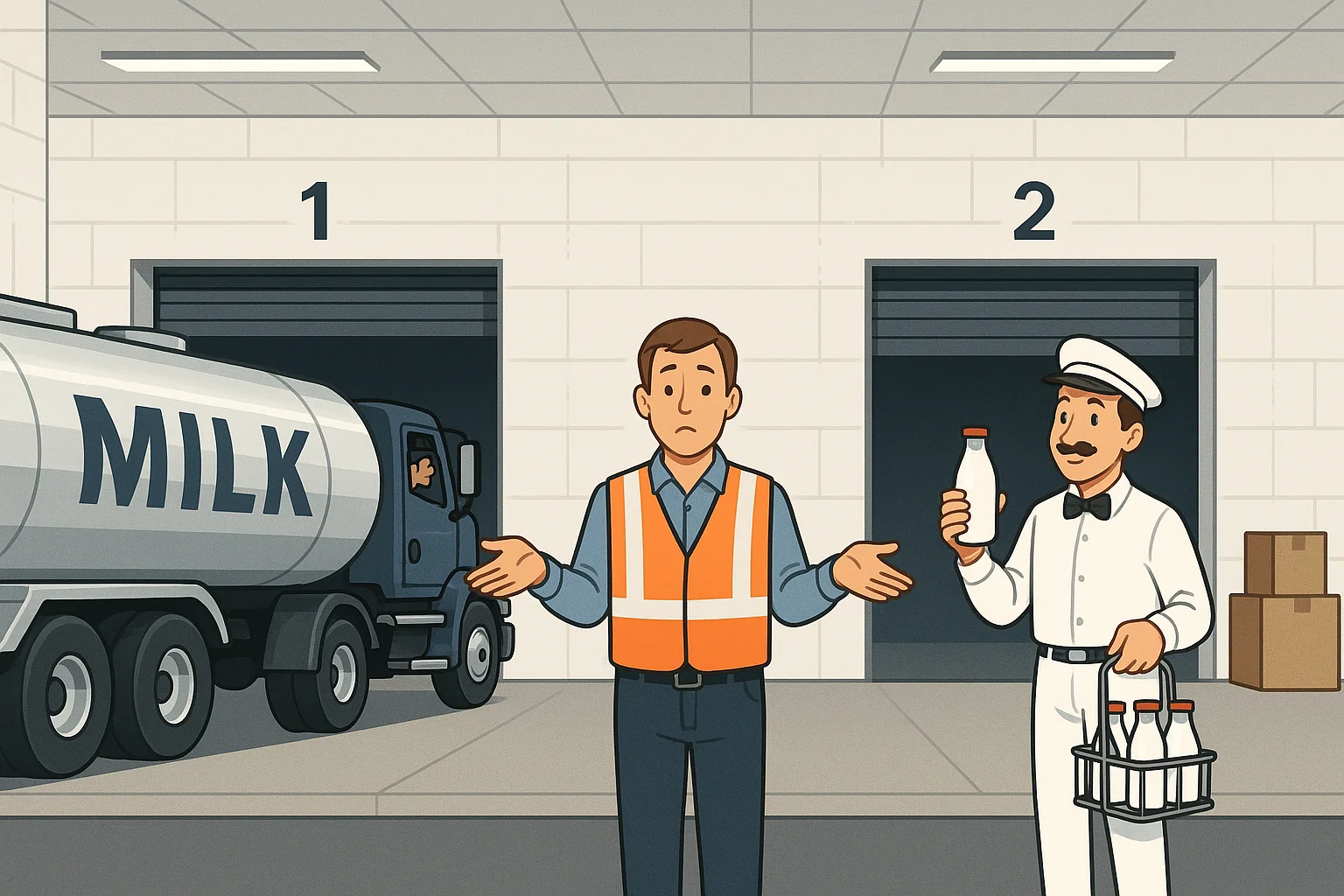
How Lot Size Affects Stock Turnover
A business can have good demand for an item and still carry more inventory than it needs. One common reason is that it buys or produces the item in batches that are much larger than the immediate requirement.
That is where lot size matters. The quantity chosen for each purchase order or production batch affects how quickly stock is used, how much space it occupies and how often the business needs to replenish it.
The quantity behind each replenishment decision
Lot size is simply the quantity ordered or produced in a single batch.
If a buyer orders 1,200 units each time, the lot size is 1,200 units. If a production team makes 500 units in each run, the production lot size is 500 units.
The choice may be deliberate, such as ordering a full pallet or meeting a supplier's minimum order quantity. In other cases, it may be a planning setting that has been in place for so long that nobody has revisited whether it still makes sense.
The important point is that lot size does not just determine the next order quantity. It influences the inventory position between one replenishment and the next.
Why larger batches can slow stock turnover
Stock turnover describes how frequently inventory is sold or consumed and then replaced. When replenishment quantities are large, stock will usually take longer to work its way through the warehouse before the next order is needed.
For example, imagine an item with regular demand. If the business replenishes it in smaller quantities, inventory is topped up more often but the average amount held is lower. The stock is sold or consumed and replaced more frequently.
If the same item is replenished in much larger quantities, more stock arrives at once. It may be efficient to receive or make that larger batch, but part of it will sit until demand catches up. This generally reduces stock turnover and increases the amount of working capital tied up in inventory.
Smaller lot sizes therefore tend to support higher stock turnover. They can also reduce holding costs because there is less inventory to store, count, insure and manage.
That does not mean the smallest possible lot size is automatically the right answer.
The operational trade-off
Larger lots often exist for sensible operational reasons.
A supplier may ship a product on pallets containing 1,200 units. Ordering exactly 1,200 units may fill a pallet efficiently, reduce freight complexity and make receiving easier. The supplier may also have a minimum order quantity that makes smaller orders unavailable or uneconomic.
The same logic applies in production. A manufacturing team may prefer to make a larger batch because each production run requires setup time, labour, cleaning or material preparation. Making very small batches could reduce inventory, but it could also create more setups and more disruption on the production schedule.
Material handling matters as well. A warehouse designed to receive, store and move full pallets may handle a 1,200-unit delivery more efficiently than many small deliveries. Fewer purchase orders, receipts and put-away transactions can reduce administration and handling effort.
So the decision is not simply:
- Smaller lot size equals good. - Larger lot size equals bad.
It is a balance between inventory efficiency and operational efficiency.
A simple pallet example
Suppose raw material is delivered on pallets of 1,200 units. The business may set its purchasing lot size to 1,200 units because that matches the supplier's shipment configuration and the warehouse's handling equipment.
This can be a sensible choice. Ordering smaller quantities might mean paying for partial pallets, arranging more deliveries or creating extra receiving work.
However, the planner should still consider how quickly 1,200 units will be consumed. If demand is slow, a full pallet may remain in storage for a long time. If demand is fast and consistent, the same pallet quantity may be entirely reasonable.
The lot size has not changed the underlying demand. It has changed how much stock is held while waiting for that demand to occur.
Questions worth asking before setting a lot size
Lot-size decisions are often treated as a master-data setting, but they are really a business decision. Before accepting a quantity because it is convenient or familiar, planners should understand what is driving it.
Useful questions include:
- How much demand is expected over the period between replenishments? - Does the supplier have a genuine minimum order quantity? - Does the quantity match a pallet, container, production batch or other handling constraint? - What extra cost or effort would smaller orders or production runs create? - How long will the batch sit in stock at the expected rate of demand? - Is the inventory and storage cost justified by the operational saving?
These questions help separate a real constraint from a historical habit.
Look beyond the order quantity
A lot size can look reasonable when viewed only as a number. It becomes more meaningful when converted into time.
For example, a lot of 1,200 units may be modest for an item that uses 1,200 units each week. It may be excessive for an item that uses 1,200 units over several months.
Thinking in terms of how long the batch will remain in stock helps connect the purchasing or production decision to stock turnover. It also makes it easier to see whether the business is carrying inventory because it needs protection against uncertainty, or simply because it is replenishing in quantities that are larger than demand requires.
Key Takeaways
- Lot size is the quantity ordered or produced in a single batch. - Smaller lot sizes generally lead to higher stock turnover because inventory is replenished more frequently in lower quantities. - Larger lot sizes can reduce ordering, production and material-handling effort, but may increase inventory and holding costs. - Supplier minimum order quantities, pallet quantities, demand and handling capabilities can all influence the right lot size. - The best lot size balances operational efficiency with the cost of holding inventory for longer.